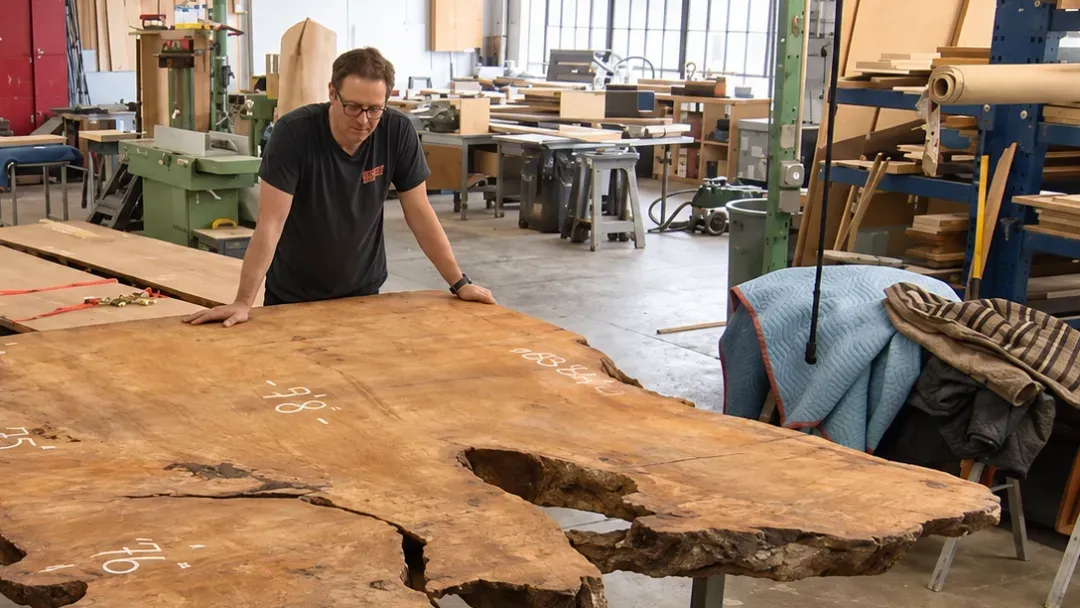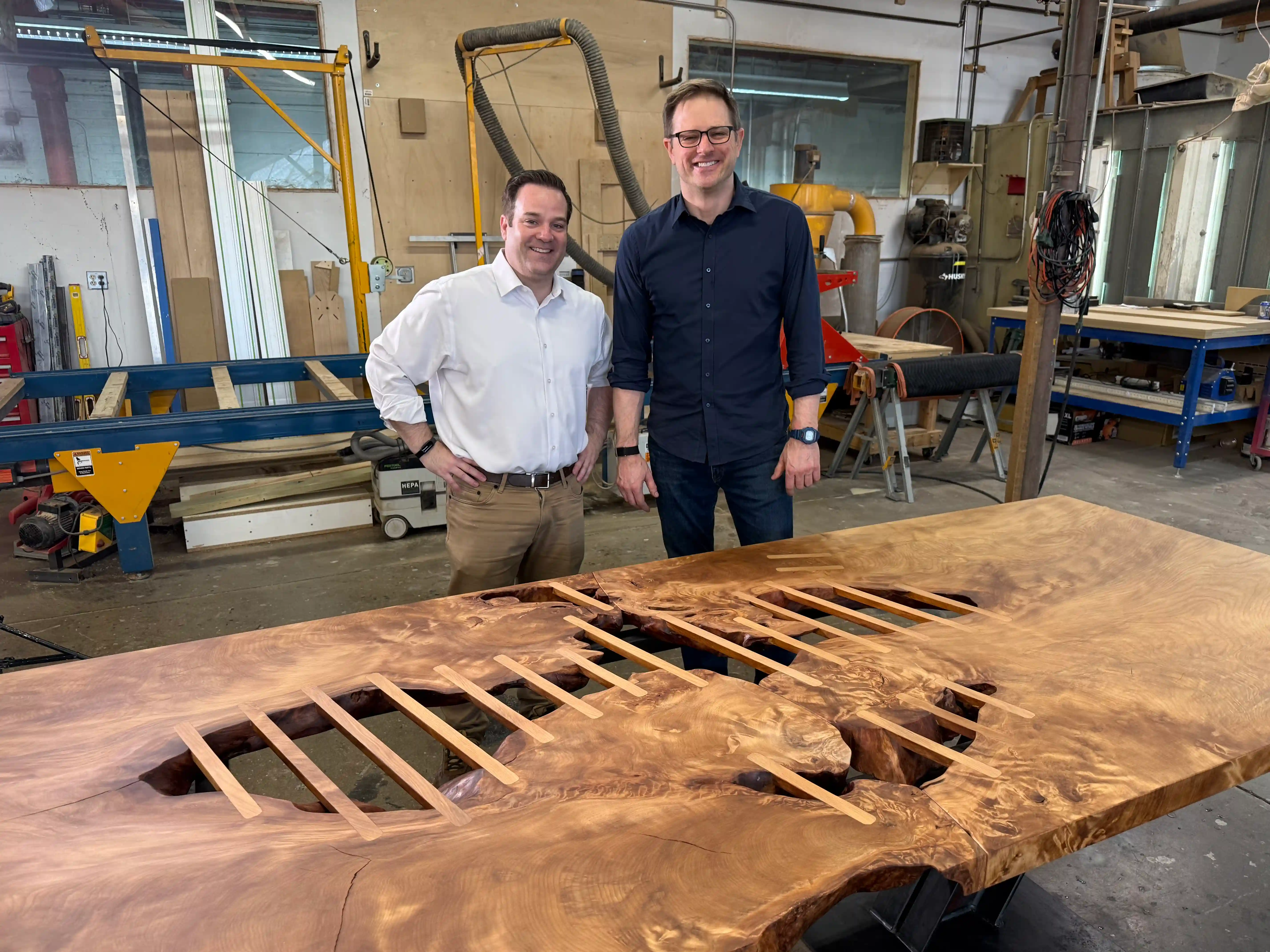
Two pieces of ancient New Zealand kauri, end jointed in an end grain match, radiocarbon dated by the University of Georgia, and shaped over sixteen months in our Chicago workshop into a ten foot table, now a showroom piece on display by appointment. This is not a table you simply buy. It is a piece of time, cut from a kauri that was growing about two thousand years ago, as Rome was turning from republic to empire. Every ring in it recorded a season no one alive has witnessed.
2,080
Radiocarbon age in years
16
Months in the workshop
10 ft
Finished length
One
Never to be repeated
Watch the story
Reporter Mike Lowe came to the shop while the table was still in progress, and we walked him through where the wood came from and how it was being built.
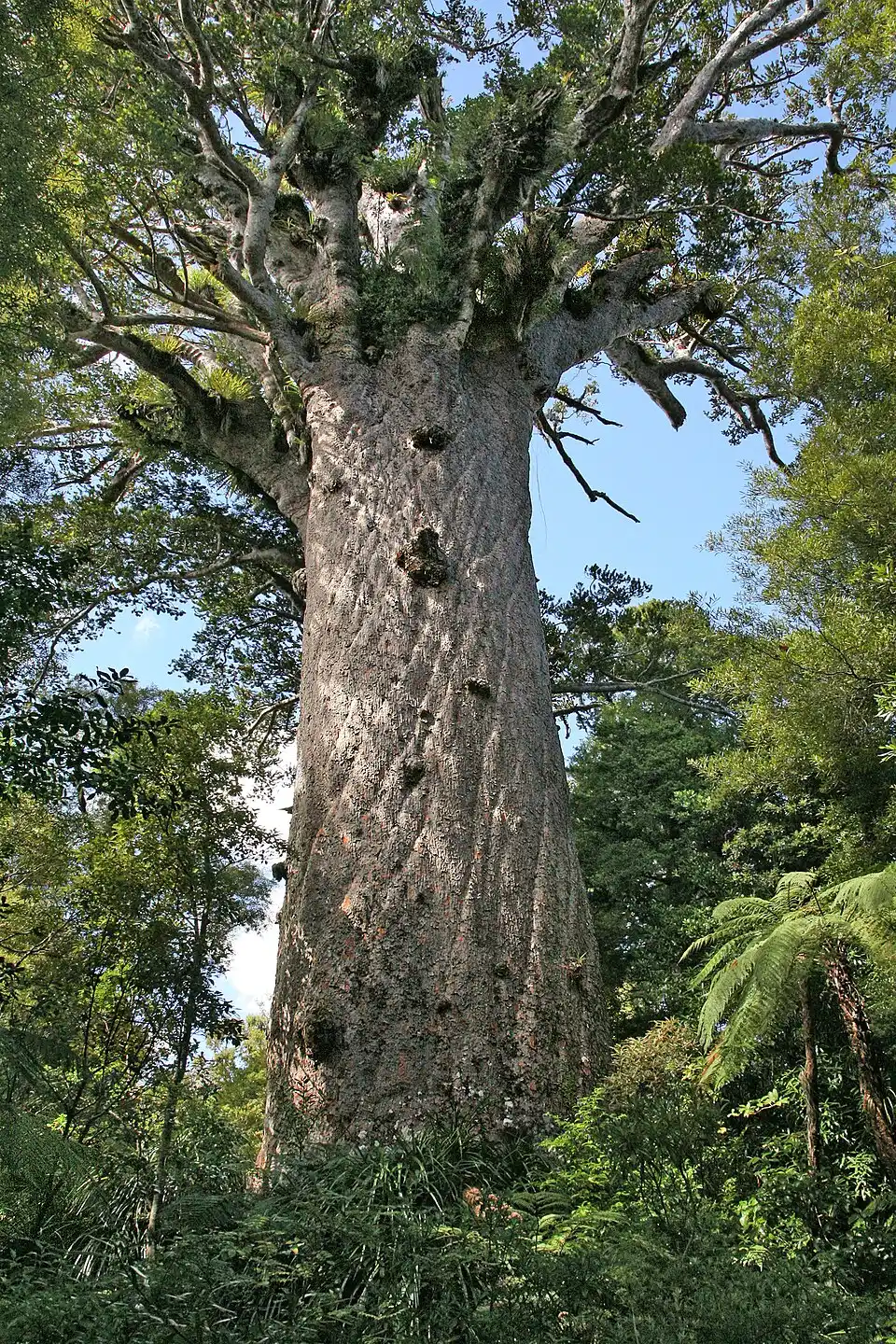
Kauri once covered the north of New Zealand. Wood like this survives because it was buried in wet ground and sealed away from oxygen. What destroys most timber preserved this one instead.
No one can say exactly when it fell or how long it lay underground. When it was lifted out, the wood was still sound, still workable, and carrying a color and shimmer you rarely see in timber.
Radiocarbon dating report
2,080 ± 30
Radiocarbon years · Calibrated 175 to 32 BC
View the report (PDF)
We did not want to guess at the age, so we had it tested. The University of Georgia measured a radiocarbon age of 2,080 years, plus or minus 30. Calibrated, that places the growth of the tested wood between roughly 175 and 32 BC.
That means this tree was alive and growing during the last centuries of the Roman Republic.
Wood this old does not behave like new timber. It had to be dried slowly and watched carefully, and the work could not be rushed toward a deadline.
We designed around what was already there. The voids, the movement, the marks left by its long time underground were treated as the design rather than as flaws to be sanded away.
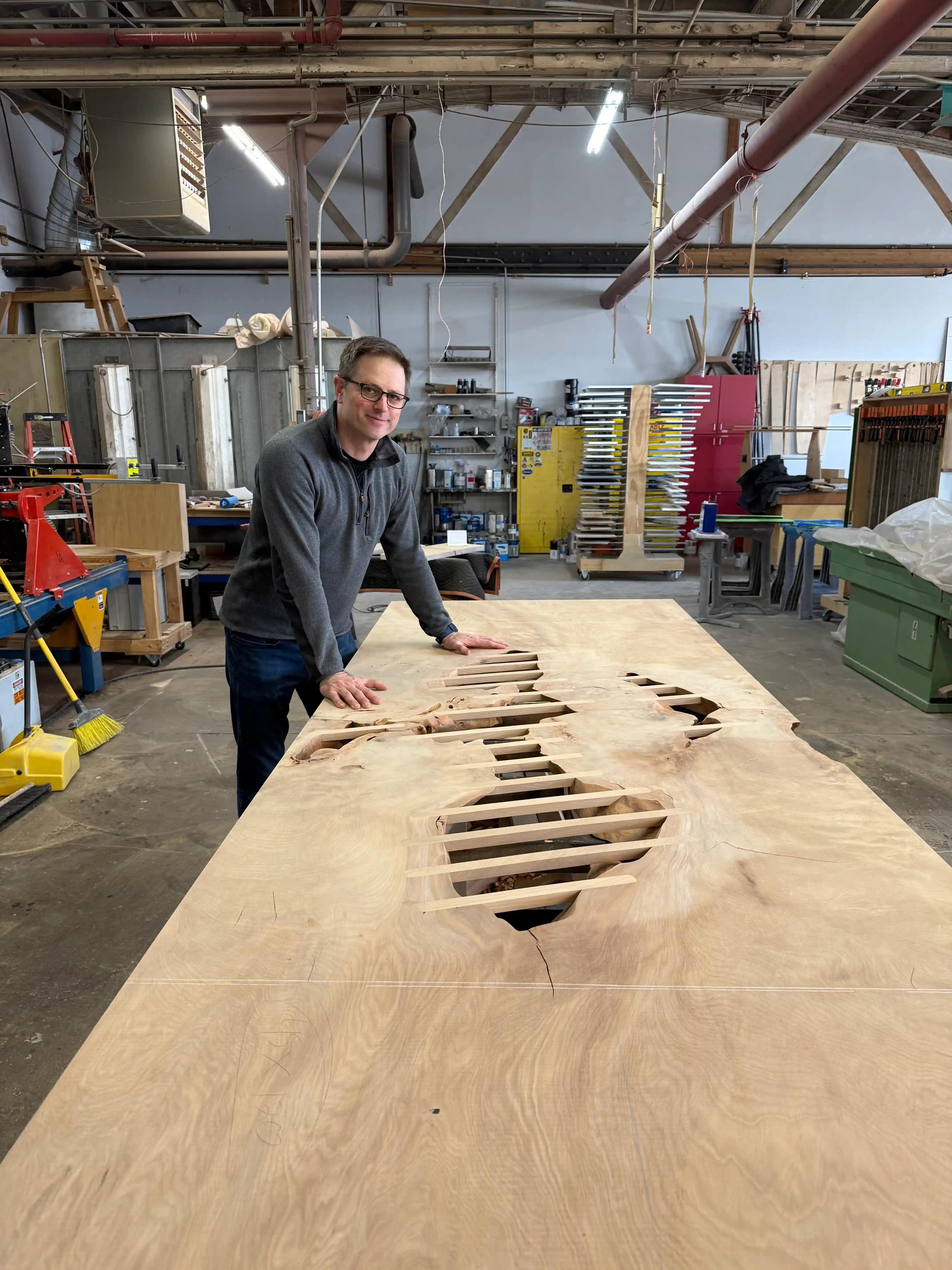
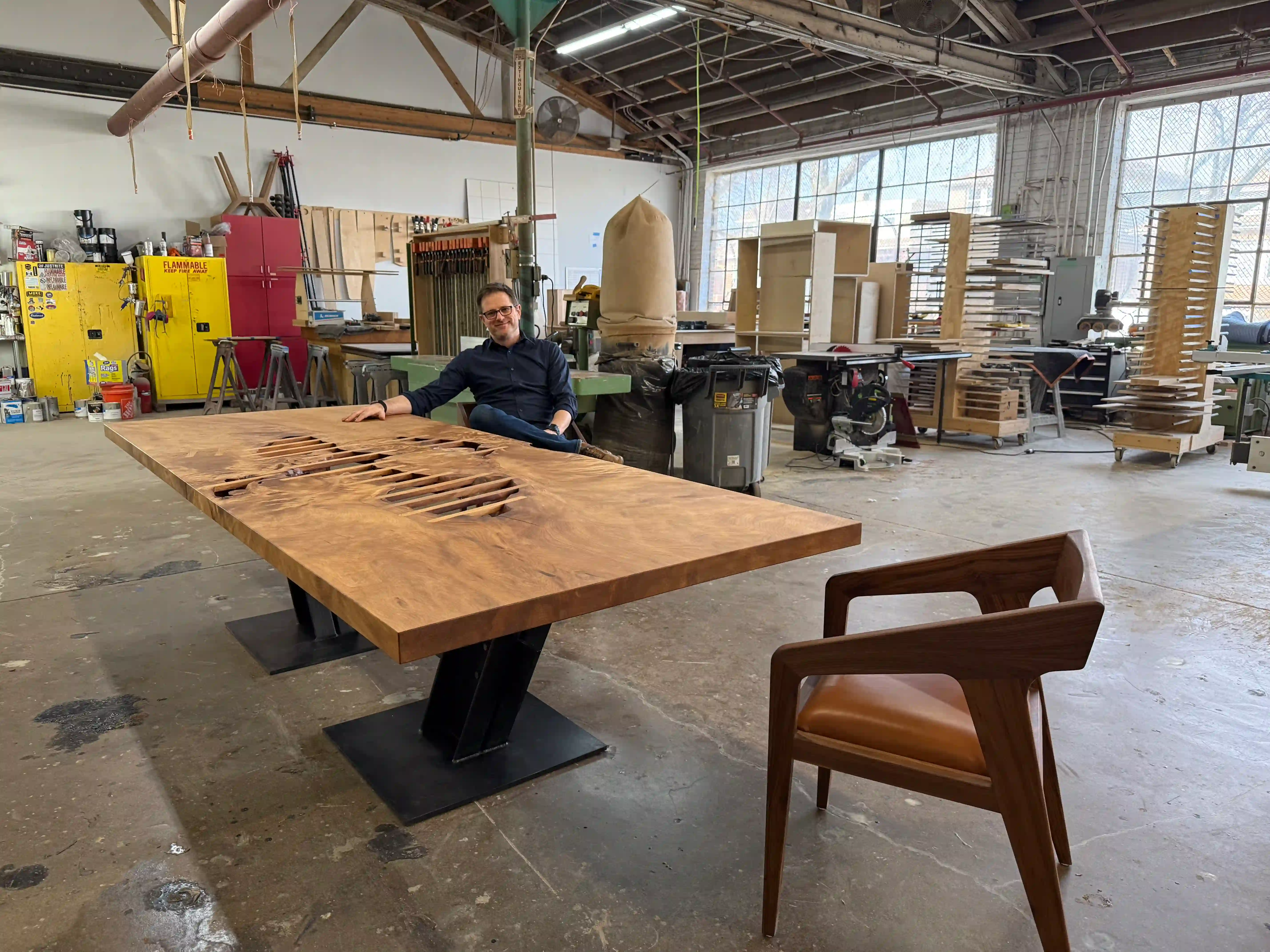
Ten feet of finished kauri on a steel base, oiled so the grain stays close to the hand rather than sitting under a film.
It is sculpture and table at once, made to be touched, used, and gathered around rather than admired from a distance.
Ancient kauri, also called swamp kauri, is wood from New Zealand kauri trees (Agathis australis) that were buried in wet ground and sealed away from oxygen. New Zealand's Ministry for Primary Industries describes it as kauri preserved underground for anywhere from about 800 to 60,000 years.
The University of Georgia measured a radiocarbon age of 2,080 years, plus or minus 30. Calibrated, the tested wood grew between roughly 175 and 32 BC. The full radiocarbon report is linked on this page.
No. It is a showroom piece, on display in our Chicago showroom, where you are welcome to see it by appointment.
Over sixteen months in our Chicago workshop. The wood was dried slowly, the two pieces were end jointed in an end grain match, the natural voids were kept as part of the design, and the ten foot top was finished in oil and set on a blackened steel base.
Yes. Ancient kauri is rare and every slab is different, so a new kauri table depends on the wood we can source for you. We can also design a table inspired by this one in walnut, white oak, or another hardwood. Every Statement Chicago piece is designed by Jerry Rodman and built to order by our team of four in our Chicago workshop. Tell us about your room and the wood you have in mind, and we will tell you what is possible.
Yes. The table is on display at our workshop and showroom, 2833 N Tripp Ave, Chicago, by appointment. Schedule a visit through our Showroom page.
Commission your own
Every Statement Chicago table begins with a conversation about your room, how you live, and the wood you love. Jerry designs each piece, and our team of four builds it by hand in our Chicago workshop, in ancient kauri when we can source it, or in walnut, white oak, or another hardwood.